
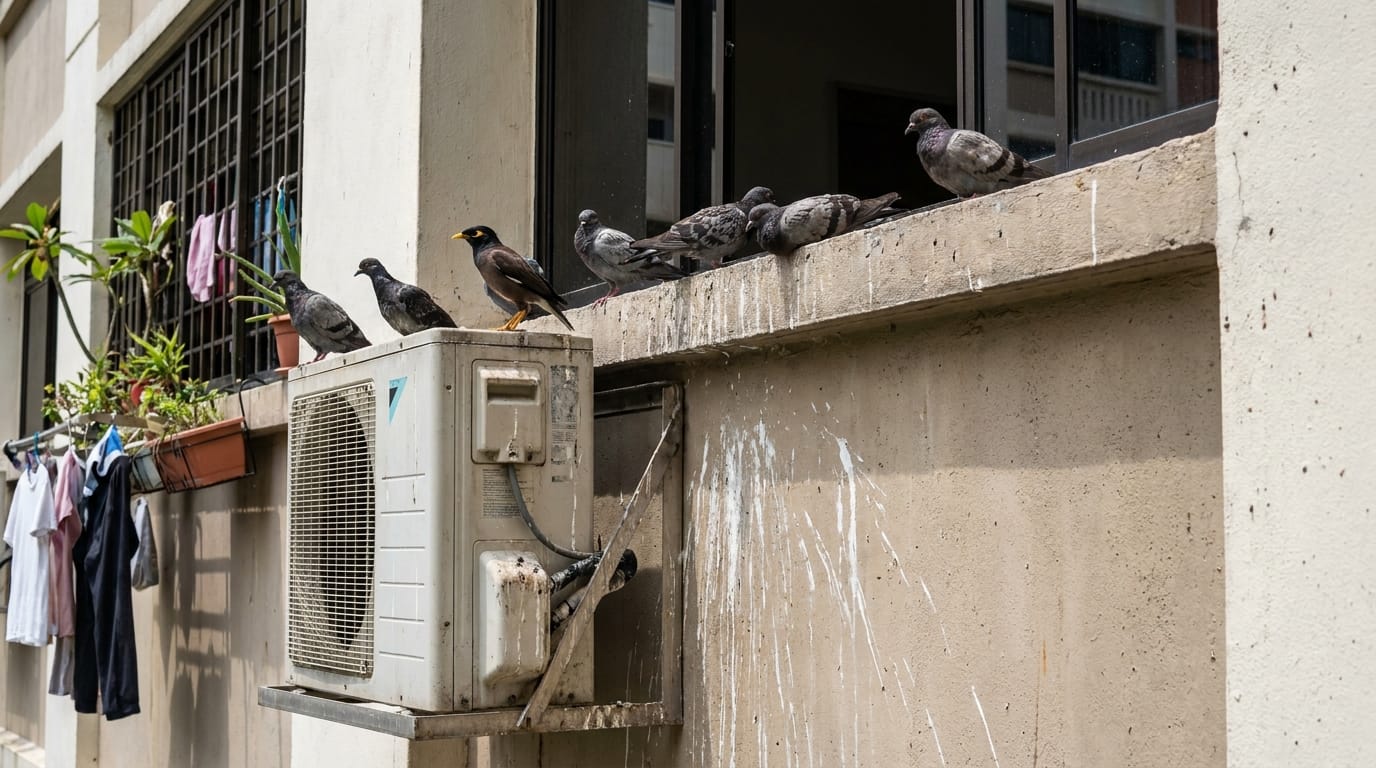
Few building problems are as visible, or as persistent, as pest birds. Pigeons and mynas (both the Javan myna and the common myna) foul façades and walkways, nest in signage and service areas, and create real public health risks around F&B premises. And because birds are intelligent and site-faithful, the usual reactions (shooing, one-off netting of a single ledge, plastic owls) rarely change anything for long.
Why the birds keep coming back
A building with a bird problem is offering the birds something: food (exposed waste, outdoor dining scraps, well-meaning feeders), shelter (ledges, beams, plant rooms, signage cavities) or safe roosting height. Until that offer is withdrawn, dispersal is temporary by design: the birds return within days, or another flock takes their place.
This is why effective bird management always starts with a survey: which species, how many, where they roost and nest, and what is sustaining them on your site specifically.
What actually works: exclusion first
Professional bird control in Singapore is built on physical exclusion, supported by deterrence and housekeeping:
- Bird netting: the gold standard for protecting large openings, air wells, plant rooms and loading bays; colour-matched and tensioned neatly, it is barely visible.
- Stainless-steel spikes and wire systems: for ledges, beams, pipes and signage where birds land and roost.
- Deterrent systems: visual and acoustic deterrents have a place, but only rotated intelligently and combined with exclusion; used alone, birds habituate within weeks.
- Housekeeping changes: securing bin centres, adjusting outdoor dining clean-up, and discouraging feeding remove the food supply that anchors a flock.
Don't skip the clean-up
Accumulated guano is more than an eyesore: it harbours fungal spores and bacteria, corrodes concrete and steel, and creates slip hazards. Professional guano cleaning includes disinfection and proper protective procedures, and it should happen before proofing is installed, not after.
What a professional programme looks like
A well-run engagement typically follows five steps: a bird survey and audit, a proofing specification matched to the building and species, installation (including work at height under proper safety procedures), sanitisation of affected areas, and follow-up monitoring with written reports. For managed properties, that documentation matters: it is what turns 'we did something about the birds' into evidence for your committee, tenants or auditors.
The takeaway
Stop paying for dispersal that doesn't last. ESC designs exclusion-first bird management programmes for commercial buildings, F&B, industrial facilities and town councils across Singapore.